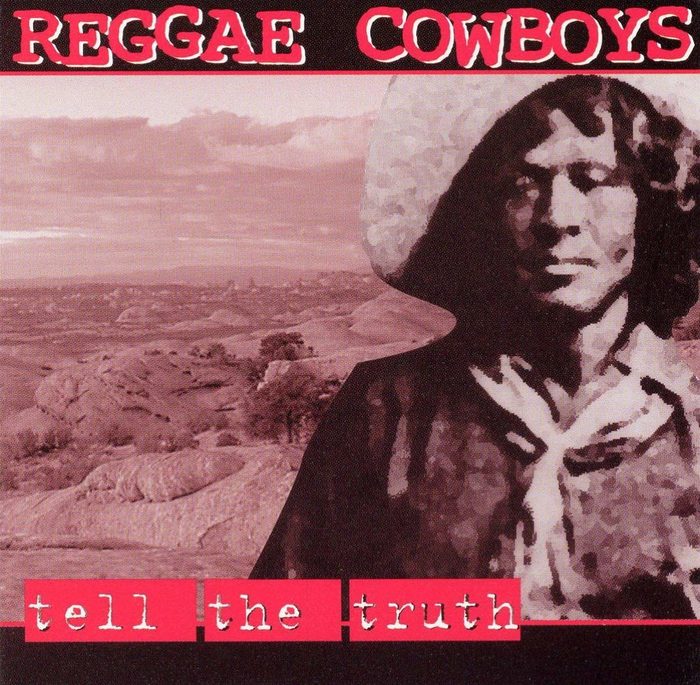
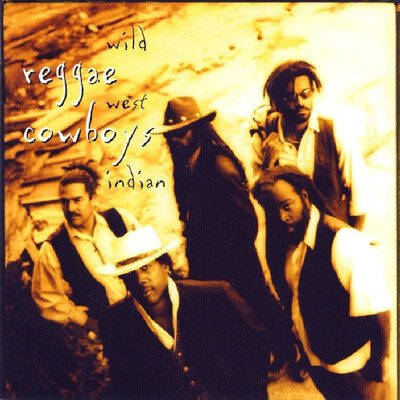
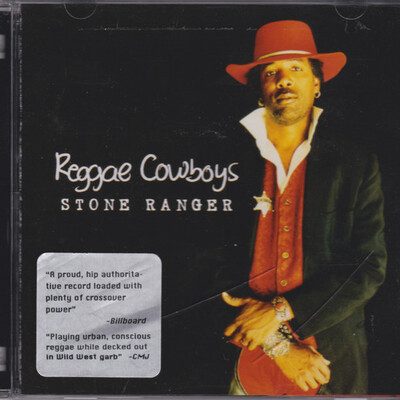
"The best kept secret in Reggae music right now... This group is a breath of fresh air. Their mastery of instruments gives a crossover blend of Hillbilly Western Country music dubbed with Roots Reggae... This is a band that I would love to see perform at Reggae Sumfest as these Cowboys bring the fun back to Reggae."
Jamaica Select, Gargamel U.K.
"The stagnant reggae scene needs a ruff 'n tuff live act like the Reggae Cowboys to revitalize things... look for the band to revive a storied subgenre, sparking heritage-minded resurrections of the wild west reggae of the late '60s and early '70s."
Billboard
"Beautifully crafted blend of riddims makes for a memorable shootout at the conscious dancehall corral... Reggae Cowboys have made a proud, hip, authoritative record loaded with plenty of crossover firepower."
Timothy White, Editor-in-Chief, Billboard
"Seamlessly combining Ennio Morricone's spaghetti-western soundtrack music with Marley and the Wailers' one-drop rhythms, these roots-rock wranglers boast gun-smokin' lyrical appeal and home-on-the-range humor, branding reggae with galloping Western grit."
Rhythm Magazine
"Possibly not since (or before) Bob Marley's I Shot the Sheriff has reggae music so openly flirted with country & western themes."
The Word, Toronto
"They incorporate everything from rocksteady to country and western (or more aptly spaghetti western), alongside tinges of blues and a healthy dose of rock... Their own compositions are just as strong, with the syncopated beat and sinuous-as-a-snake bass counterpointing the western slide guitars, turning genres and assumptions on their heads."
Goldmine
"Full of commercial yet authentic classic reggae a la Steel Pulse. Then there's the stirring Mark Knopfler–Eric Clapton–Carlos Santana guitar."
Orange County Register
"One of the most unusual groups to come forward in recent memory. Playing urban, conscious reggae while decked out in Wild West garb, they combine the pulse of reggae with the soulful influences of Marvin Gaye and Curtis Mayfield, along with an unusually philosophical approach."
CMJ (College Music Journal)
"Combining western music and reggae may sound like an inadvisable gimmick, but the Reggae Cowboys somehow pull it off in a way that appeals to fans of both genres. Fresh, upbeat reggae with a country twang — never straying far from reggae's roots."
The Washington Post
"Wild West Indian réussit la synthèse du son au point qu'il transcende toute sensation de 'mélange' et que les chansons s'imposent, sincères, touchant parfois à une vraie émotion."
"Wild West Indian achieves such a synthesis of sound that it transcends any sense of mixture — the songs stand on their own, sincere, sometimes touching a genuine emotion."
Hélène Lee, Libération (Paris)
"Les écouter, c'est comme se balader dans un western avec Clint Eastwood... et Bob Marley!"
"Listening to them is like strolling through a western with Clint Eastwood... and Bob Marley!"
Okapi (Bayard Presse, Paris)